One day, Hemnath asked, “You have heard of Trailakya Sen, haven’t you?”
Snehalata replied, “The one who lived in Rangoon?”
“Yes. He returned to Rajdiya today.”
[…]
“I can’t begin to describe the kind of distress Trailakya’s family has gone through! No ships, no boats—”
“Then how did they return?”
“They walked.”
“But I have heard Burma is far away!”
“Yes. Holding the hands of their children and grandchildren, they crossed hills, mountains, forests, and jungles, and first reached Assam. From there, they came to Rajdiya.”
After a moment’s thought, Snehalata asked, “They came on foot, all right—but could they bring any belongings with them?”
Hemnath shook his head vigorously. “Nothing. Nothing at all. They couldn’t bring a single thing except their bodies and the clothes on their backs.”
[….]
“They were quite well off in Burma.”
“Well off? Trailakya was more than that. He had built a fortune! In Rangoon alone he had three houses; there was another in Prome. Apart from these, there were landholdings and coconut groves. They had plenty of cash as well.”
Snehalata sighed, “Yet they couldn’t bring a thing. Everything had to be left behind in a foreign land.”
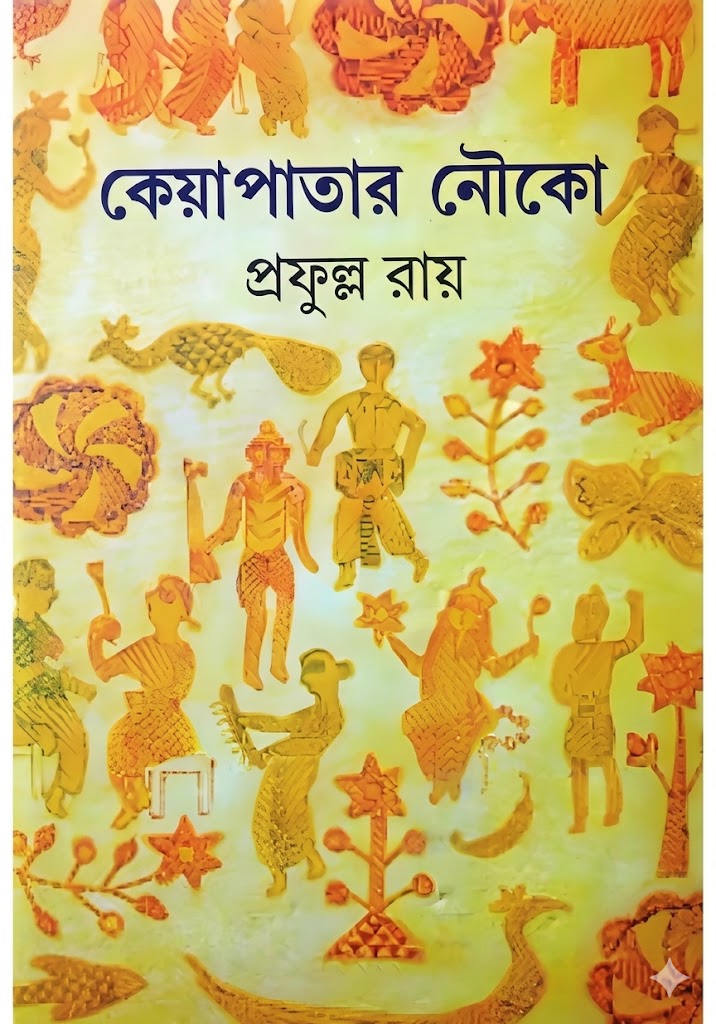
This scene from Keyapatar Nouko (1963) by Prafulla Roy captures the mass exodus of Bengalis from Burma during the Japanese invasion of 1942. When we think of the relationship between Bengal and Myanmar (formerly Burma) beyond the frame of recent political developments, we often recall stories of people who lived or grew up in Burma before returning, or being forced to return, during the Second World War. In more recent writing, this engagement with Burma continues in works such as The Glass Palace (2000), The Storm (2018), and Samira Surfs (2021). These stories of migration, conflict, and displacement, however, are part of a much longer history. What, then, has the history of Bengal’s encounter with Burma looked like, and how have Bengali writers imagined it?
Too often, our understanding of such connections is shaped through the lens of the British Empire, as if cross-cultural interactions began only with colonial rule. However, Burma and Bengal had shared extensive socio-cultural and economic exchanges long before the British landed on their shores. This vibrant network of trade and movement across the Bay of Bengal finds mention in works like Sharadindu Bandopadhyay’s story “Chuya-chandan”, where we meet a young Chandandas returning to Bengal after nearly two years at sea: “He had seen many lands in this world: Ceylon, Cochin, Sumatra, Java Islands—nothing left for him to see”. We find clear examples of such connections in historical records as well. In the early fifteenth century, King Min Saw Mon, driven from his throne, sought refuge at the court of the then Sultan of Bengal, Jalaluddin Muhammad Shah, and entered his service. With the Sultan’s support, he returned to reclaim his throne and establish the new capital at Mrauk-U, marking a period of close cultural and political ties between Bengal and Arakan.
The seventeenth-century Arakanese royal court was a flourishing centre of Bengali literature, associated with poets such as Alaol and Daulat Kazi. During the Mrauk-U period, Bengali became a privileged language of literary expression for Muslims in the Arakan kingdom. Daulat Kazi is believed to have arrived from the Chittagong region, while Alaol was brought to Arakan from Faridpur by Luso-Arakanese raiders. Initially a royal slave, Alaol’s literary talents and command of Persian, Hindavi, Sanskrit, and Bengali enabled him to rise within the circle of Muslim elites at the Buddhist court of Arakan. In his works, we find valuable glimpses of the Arakan court. Alaol marks a significant moment in the history of Bengali Muslim literature, notably in his use of Bengali to compose texts on Islamic themes. Yet he was not writing in isolation. Alongside urban courtly literature, we also have a rich body of Middle Bengali literature in Arakan produced by rural and provincial authors.
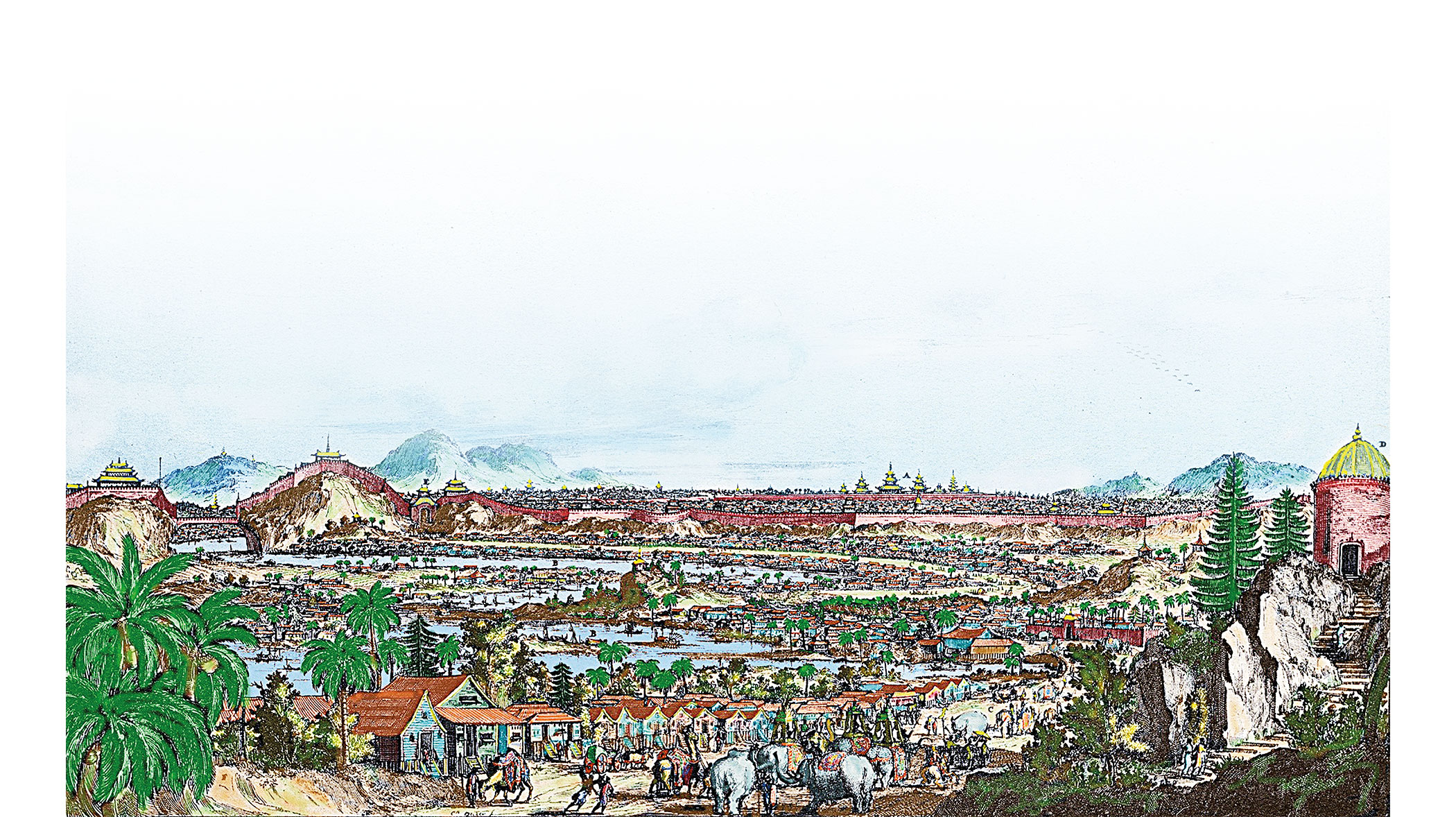
“Vista of Mrauk-U, or Arakan” by Dutch traveller and physician Wouter Schouten captures the splendour of the Arakan Kingdom’s capital in the 17th century.
The nineteenth century witnessed the long and protracted Anglo-Burmese Wars, through which Burma was gradually annexed into British India. With increasing British interest in Burma’s natural resources, three wars were fought between 1824 and 1885, each resulting in the conquest of more territory. Burma became the largest rice exporter in the world, drawing migrants from across the subcontinent to its shores to work in a wide range of capacities. However, as the Bay of Bengal came to occupy a central place in the imperial economy, we find a more fluid and organic relationship of movement and exchange being rapidly replaced by unequal colonial hierarchies.
This reconfigured relationship between Burma and Calcutta was not always benign: military operations for the annexation of Burma were directed from the colonial headquarters at Fort William in Calcutta. Under British rule, economic migrants came to dominate many aspects of everyday life in Burma, permeating all layers of society—from trade and security to moneylending. Bengal, in particular, supplied an influential class of migrants. The colonial bureaucracy in Burma was largely constituted of English-educated Bengali babus, many of them graduates of the University of Calcutta. In British India, this fostered a tendency to view Burma as a peripheral part of a wider Indian horizon—a way of imagining neighbouring regions and cultures that has not entirely disappeared.
As people increasingly moved back and forth across the Bay of Bengal, Burma came to leave a deep imprint on the literary imagination across Bengal and beyond. Literary narratives about Burma range from Mandalay in the Barrack-Room Ballads to Burmese Days. Closer to home, colonial India’s curiosity about Burma is reflected in numerous memoirs, autobiographies, and ethnographic accounts. For instance, in the women’s journal Stri Darpan, Rameshwari Nehru offers an account of the relative freedom enjoyed by Burmese women, using it to politically mobilise her local readers. Like writers from across British India, Bengali authors were equally drawn to Burma.
Rabindranath Tagore’s short story “Daliya”, included in his Galpaguchha, is set in Arakan. It may be read as a literary reimagining of the fate of the daughters of the Mughal prince Shah Shuja, once the governor of Bengal with his capital in Dhaka. While not a historical retelling, the story draws on the memory of Shuja’s flight to Arakan after his conflict with Aurangzeb, pointing to a long history of forced displacement and refuge-seeking that connects Bengal and Burma. Arakan here appears as a frontier space at the edge of Bengal’s world, a place where the unfamiliar is encountered and the boundaries between civilisation and wilderness blur.
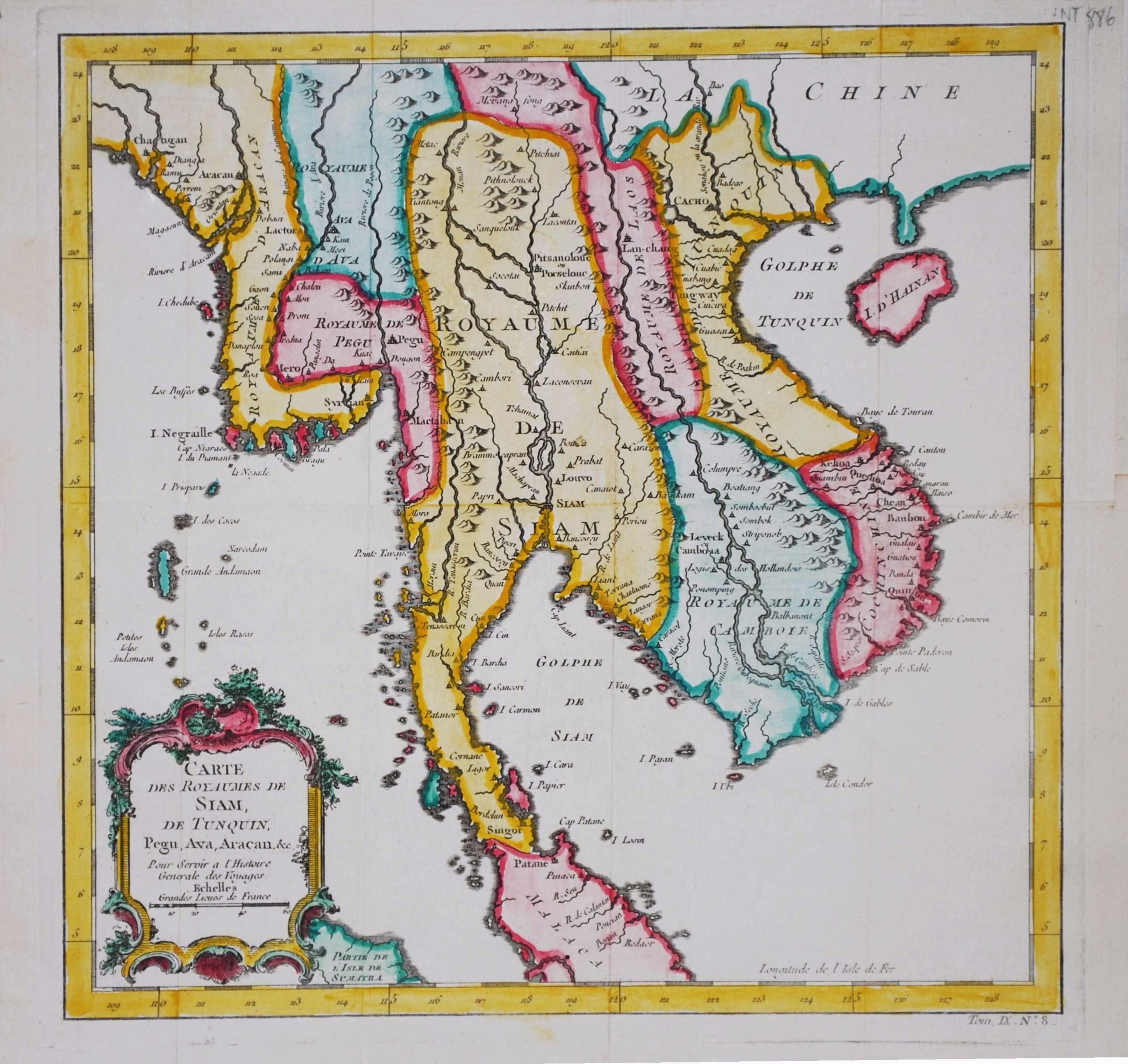
Arakan at the height of its area expansion in the early 17th century. Photo: Wikimedia Commons
As Tagore writes: “Beyond the bounds of civilised society, on the fringes of Arakan—where are the people? Here, only the trees blossom with the changing seasons; and the blue river swells in monsoon, runs clear in autumn, and grows thin in summer. The exuberant voices of birds carry not the slightest trace of censure; and the southern breeze, at times, carries the faint hum of human activity from villages across the river, but never their whisperings. As forests gradually overtake a fallen mansion, so too, after some time, under nature’s stealthy assault, the firm, man-made foundations of social conventions begin to erode unnoticed, and everything becomes one with the surrounding natural world.” As poetic and mesmerising as this description is, it nevertheless bears the mark of a distinctly romanticised imagination, with Arakan appearing as an almost idealised natural world emptied of social life.
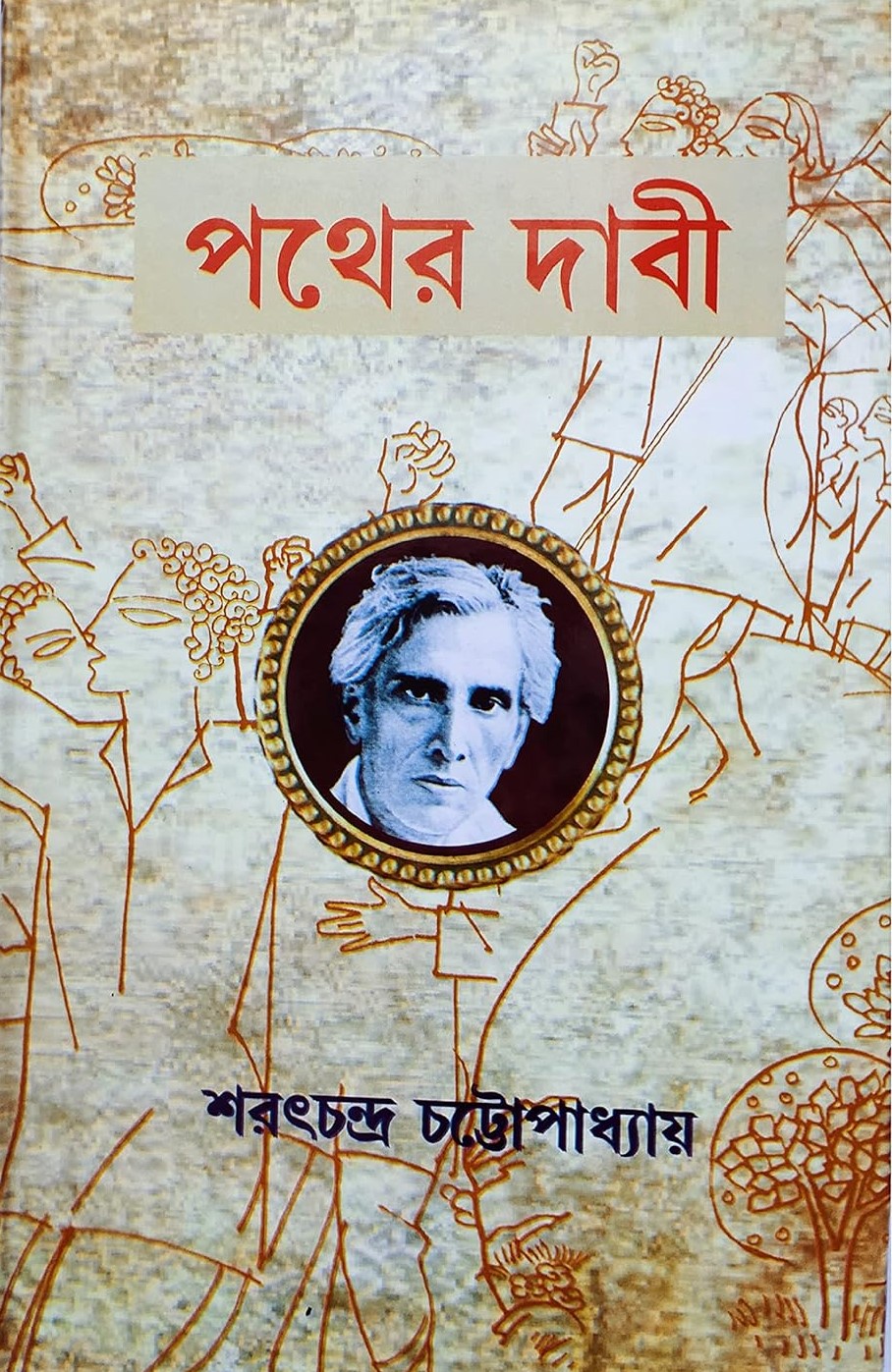
In the Bengali imagination of Burma, Tagore’s idealised vision marks one strand; another emerges in the novels of Sarat Chandra Chattopadhyay, who situates two of his major novels in Rangoon. In Srikanta (1917–1933), the wandering protagonist travels to Burma after hearing from an acquaintance that it was “a land whose cities had streets paved with gold and where Bengalis were at such a premium that they were lifted bodily from ships carrying them the moment the latter touched the shore and carried away by Englishmen to be showered with jobs, money, power and prestige”. Similarly, Pather Dabi (1926) revolves around Apurba, who arrives in Burma in search of economic opportunity. Burma, here, appears as a golden land of abundance and economic promise—an image that appealed to many fortune-seeking Bengalis during the colonial period.
Alongside the notion of endless opportunity, Burma was also feared as a place where the orthodoxies of caste and religion might be unsettled. Apurba, the protagonist of Pather Dabi, is an orthodox Brahmin who brings with him a Brahmin cook from Calcutta to ensure the ‘purity’ of his food. We find his mother convinced that Burma is “an absolutely irreligious country… inhabited only by barbarians”. Yet, in Chattopadhyay’s imagination, Burma becomes a space beyond the shackles of tradition and custom, where one may reinvent one’s identity and recognise the limitations of inherited religious dogmas. In Srikanta, Chattopadhyay paints the ‘Mistri Palli’ of Rangoon as a cultural melting pot, inhabited by people from all around the world. This cosmopolitan vision is grounded in personal experience: Chattopadhyay himself lived there for a significant period during his thirteen-year residence in Burma.
Burma also came to be imagined as fertile ground for political revolutionary activity. As militant societies emerged in Bengal as an alternative to Gandhian non-violence, strict surveillance pushed some of their activities beyond regional borders. Owing to its geographical proximity, Burma became a key site for such underground organisations. This is reflected in Pather Dabi, named after an imaginary secret society operating in Burma and dedicated to a violent revolution against British rule in India. The history of the novel’s publication and censorship reveals how deeply uncomfortable the colonial administration was made by its fictional world. First published in 1926, it was proscribed as seditious the following year. It was only in 1939 that the A. K. Fazlul Huq ministry succeeded in lifting the ban, after which a second edition was published.
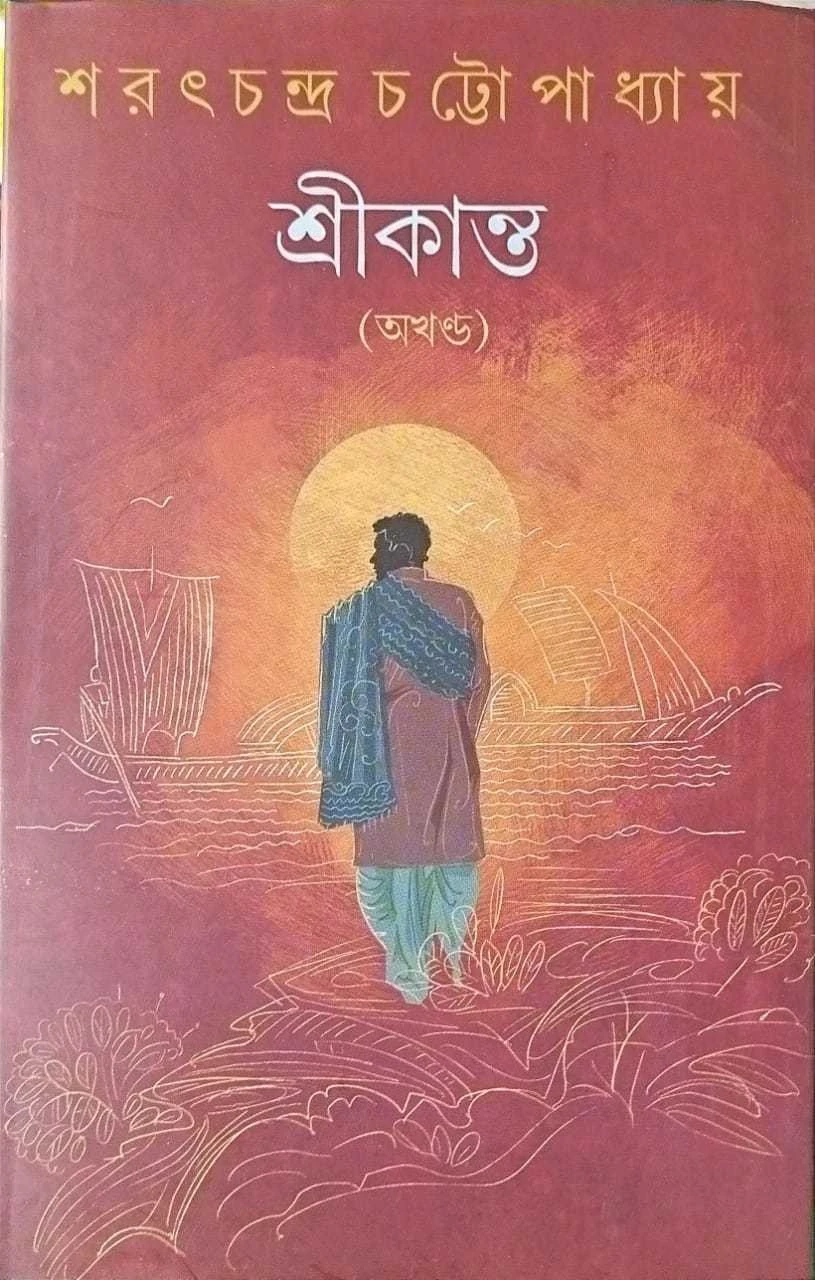
While the early twentieth century was a period of revolutionary upheaval, it was also a time when the ‘woman question’ gained increasing prominence. Once again, we find writers turning towards Burma. This turn arose from a distinct ideological and political conundrum. The condition of women in colonised societies was often invoked to justify imperial rule—what Gayatri Chakravorty Spivak famously described as “white men saving brown women from brown men”. For nationalist writers like Sarat Chandra Chattopadhyay, this made it difficult to position Western women as ideals. Instead, an alternative was found closer to home, in the neighbouring society of Burma. In Srikanta, the protagonist is fascinated by the presence of Burmese women in public festivities—an ease of movement and autonomy unimaginable for the average woman in contemporary Bengal. This compels him to reflect on the condition of women in his own society: “I couldn’t help comparing them to Indian women and wondering what we had gained by depriving them of the freedom that their Burmese sisters enjoyed”.
Across these twentieth-century Bengali fictional works, a question demands attention: how many fully realised Burmese characters do we encounter? More often than not, Burma serves as a backdrop for the lives and concerns of non-Burmese protagonists. The complexities of Burmese society, or questions of Burmese identity, rarely come into sustained focus. Surely, the Japanese invasion of Burma did not affect Bengalis alone. If Trailakya Sen in Keyapatar Nouko is forced to walk back to Bengal, what of the Burmese—many of whom had no other home to return to? Their suffering, one suspects, was no less profound, yet it remains largely unheard in Bengali fiction. Pather Dabi, a novel so vocal about Bengali revolutionaries, remains strikingly silent on the question of Burmese nationalism and the growing resentment against British rule that was gathering force during Chattopadhyay’s stay in Burma. Equally absent is any engagement with Burmese discontent over the increasing presence of elite Bengalis in the urban centres of the colony.
For centuries, Bengal has remained in close contact with the intellectual traditions of Myanmar, and its ambivalent imaginative cartography has long engaged Bengali thinkers. This is a history that was gradually effaced in twentieth-century nationalist cultural narratives, which sidelined the Arakanese past of Bengali Muslim literature. At a time when recent political developments have once again brought Burma to the forefront, it is worth recalling the longer history of displacement and refuge that has bound Bengal and Burma together. When we encounter Bengali texts set in Burma, it is worth asking: does Burma emerge as a subject in its own right, or merely as a vehicle for Bengali writers to think about themselves? As a linguistic community often drawn back to its own centre, we must invite reflection on the Bengali readership itself, and on the limits of our imagination and engagement with neighbouring societies. Returning to such texts, then, is to ask how far our encounters with Burma have been shaped by a preoccupation with our own concerns—and what it might mean to move beyond that frame, and to imagine our neighbours as worlds in their own right, not only across borders but also within our own regions, where many languages and lives remain at the margins of Bengali concern.
Note: All translations from Prafulla Roy’s Keyapatar Nouko, Sharadindu Bandopadhyay’s “Chuya-chandan”, and Rabindranath Tagore’s “Daliya,” are by the author.
Dr Madhurima Sen is a researcher at the University of Oxford. Her work focuses on Bengali literature, and she translates from Bengali into English.
Send your articles for Slow Reads to [email protected]. Check out our submission guidelines for details.